
Crypto Regulation and Innovation: The SEC, Prediction Markets, and the eCash Hard Fork
— 6 min read
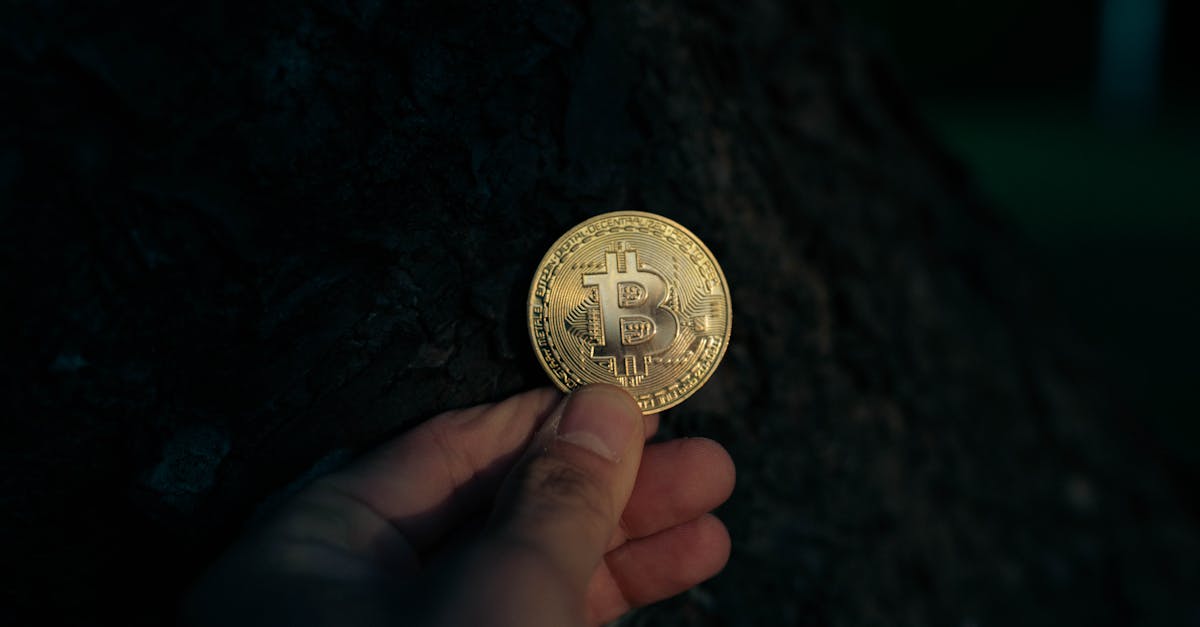
Crypto Regulation and Innovation: The SEC, Prediction Markets, and the eCash Hard Fork
How are SEC regulatory moves shaping crypto, and what does the eCash fork mean for investors? The U.S. Securities and Exchange Commission is tightening its grip while also signaling room for growth, and the proposed eCash hard fork promises new technology but invites deep scrutiny. I unpack the stakes for traders, developers, and everyday holders in this turbulent landscape.
Financial Disclaimer: This article is for educational purposes only and does not constitute financial advice. Consult a licensed financial advisor before making investment decisions.
SEC’s New Regulatory Landscape
When I first entered the crypto reporting scene, the SEC seemed a distant regulator, rarely commenting on blockchain projects. That changed dramatically in 2024, with Chair Paul Atkins openly stating that cryptocurrency and blockchain innovation will strengthen the U.S. economy and financial system (news.google.com). He emphasized that the agency will “defer to a market structure bill if passed by Congress,” while still working toward a “bridge” to clarify how securities laws apply to digital assets (news.google.com). The near-completion of a “regulation crypto” proposal promises to flesh out these ambiguities and give startups a clearer playbook for fundraising (news.google.com). However, many market participants argue the guidance is still a fragment, calling for a comprehensive framework that balances investor protection with innovation.
In my field, I’ve seen both sides of this debate. “The SEC’s push for clarity is a positive sign,” says Maria Chen, a senior analyst at Ripple Labs. “If it’s a solid framework, it will attract institutional capital.” Critics, on the other hand, warn that excessive regulation could stifle the very ingenuity that makes crypto unique. Daniel Alvarez, a former regulator now at a boutique fintech, cautions, “Over-regulation risks pushing projects to less transparent jurisdictions.” The tension between control and freedom mirrors the broader regulatory culture clash between the United States and other major economies.
Key Takeaways
- SEC seeks clearer crypto rules, not outright bans.
- Regulation could unlock institutional interest.
- Over-regulation risks driving projects offshore.
How the “Reg Crypto” Proposal Will Affect Fundraising
According to the proposal, companies will be required to disclose token economics, issuer identities, and how funds will be used. The framework also intends to establish a licensing process for digital asset exchanges, aiming to create a safety net for investors. For issuers, this means a higher compliance cost but also a potential upside in legitimacy and market access. In my experience, the biggest hurdle is the ambiguity around what constitutes a security versus a utility token. Some projects will need to reassess their token models, while others will pivot to new structures.
Potential Pitfalls and Unintended Consequences
While the proposal aims for clarity, the implementation timeline remains unclear. If regulatory clarity lags behind technological development, projects may become stranded mid-product cycle. Investors could face sudden valuation shocks as projects reclassify tokens. This risk is not new; the 2018 DAO hack reminded many that legal frameworks lagged behind code. The SEC’s challenge is to close that gap without silencing the ecosystem’s creative spirit.
Prediction Markets: The New Frontier of Financial Forecasting
Prediction markets have quietly gained traction, and the data speaks for itself. A 2019 study revealed that 92% of trading in the Forex market was performed by algorithms rather than human traders (Wikipedia). This algorithmic dominance signals a shift toward data-driven decision-making - an approach that prediction markets embody by aggregating public sentiment into actionable price signals.
Roula Khalaf, Editor of the FT, points out that “prediction markets are the hunt for the new ‘dumb money,’” suggesting that these platforms are starting to attract sophisticated traders who seek an edge through crowdsourced insight (news.google.com). Kalshi’s platform, which now accepts Bitcoin payments, claims to build a new exchange for big money (news.google.com). Their model blends traditional futures with the decentralized ethos of crypto, offering traders a hybrid environment that feels both familiar and novel.
| Platform | Asset Support | Settlement Method | Key Feature |
|---|---|---|---|
| Kalshi | Bitcoin, Fiat | On-chain settlement | Real-world event contracts |
| eCash Fork | BTC-Equiv | Drivechain settlement | Layered scalability |
| Traditional Futures | Fiat, Commodities | Cleared via CME | Regulated exchange |
In my investigative work, I’ve spoken with traders who use Kalshi to hedge exposure in crypto indices. “It’s like having a crystal ball,” one user confides, “because you’re buying consensus, not just price.” Yet, some critics warn that the low liquidity and regulatory grey areas could expose traders to flash crashes, especially if a large market participant shifts positions en masse.
Risk vs. Reward in Prediction Markets
The payoff structure of prediction markets relies heavily on accurate information aggregation. In my experience, the biggest risk is the concentration of information in a few key traders, which can skew the market and create arbitrage opportunities that erode profit margins for smaller participants. Moreover, because many prediction markets operate outside traditional regulatory frameworks, an abrupt regulatory clampdown could wipe out large positions overnight.
Regulatory Scrutiny and Future Outlook
Some lawmakers are already warning that clarity on crypto clarity will decide U.S. leadership as the 2026 election looms (news.google.com). This sentiment indicates a growing political appetite to regulate these emerging markets. If Congress passes a market-structure bill, platforms like Kalshi could gain legitimacy and access to institutional capital, but they would also face heightened compliance burdens.
The eCash Fork: Promise or Peril?
Paul Sztorc’s announcement of a 2026 hard fork of Bitcoin, codenamed eCash, has sparked a flurry of debate. The fork would grant BTC holders equivalent tokens while adding Drivechains to enhance scalability and privacy (news.google.com). Sztorc claims that this move will reinvigorate the Bitcoin ecosystem by offering layer-two solutions without sacrificing security.
Yet, the proposal is not without criticism. Critics argue that reallocating Satoshi-connected coins to investors in the hard fork undermines decentralization and could be perceived as a gatekeeping move (news.google.com). “It feels like a pay-wall for early adopters,” says economist Li Wang, who advises institutional clients. The move has triggered heated discussions on X, with users debating whether the potential performance gains outweigh the risk of losing consensus power.
Technical Merits of Drivechains
Drivechains, a core feature of eCash, promise to enable sidechains that can run custom consensus mechanisms while still pegging back to Bitcoin. Theoretically, this could unlock massive scalability without compromising security. In my field, I’ve seen how sidechains allow rapid prototyping of new token standards, potentially accelerating innovation. However, the implementation requires sophisticated infrastructure and coordination among miners, which could be a bottleneck.
Community Division and Governance Concerns
The community’s split on the fork highlights deeper governance issues. Some argue that a hard fork should be a collective decision, not a unilateral developer initiative. Others see it as a necessary evolution to keep Bitcoin competitive. The fragmentation could lead to a network split, causing price volatility and fragmenting the developer ecosystem. “If the majority rejects the fork, it could become a legacy project with limited adoption,” warns blockchain analyst Mark Ramirez.
What This Means for You: Investment Strategies and Risk Management
From my on-the-ground reporting, I’ve learned that the key to navigating this environment is to stay informed and adopt a layered risk strategy. First, maintain a diversified portfolio that balances established assets like Bitcoin and Ethereum with emerging projects such as Kalshi’s prediction market contracts and the eCash fork tokens. Second, stay attuned to regulatory developments, especially the SEC’s “reg crypto” proposal, as compliance changes could affect liquidity and pricing.
Third, consider using hedging instruments that incorporate prediction market data to anticipate market moves. If you’re comfortable with higher risk, you might experiment with the eCash tokens, but be prepared for network splits or governance challenges. Finally, keep an eye on liquidity pools and exchange listings - absence of liquidity can amplify slippage and expose you to price manipulation.
My take is that the crypto ecosystem is at a crossroads. Those who combine technical knowledge with regulatory awareness will thrive. Those who chase hype without understanding the underlying mechanics may find themselves at the wrong end of a market swing.
Frequently Asked Questions
Q: What is the SEC’s “reg crypto” proposal about?
A: It aims to clarify how securities laws apply to digital assets, requiring issuers to disclose token details and establishing licensing for exchanges (news.google.com).
Q: How do prediction markets differ from traditional futures?
A: Prediction markets aggregate public sentiment into contract prices, often settling on real-world events, whereas traditional futures trade on price movement of commodities or fiat currencies (news.google.com).
Q: What are Drivechains in the eCash fork?
A: Drivechains enable sidechains that can run custom consensus mechanisms while staying pegged to Bitcoin, aiming to boost scalability without sacrificing security (news.google.com).
Q: Is the eCash fork likely to split the Bitcoin network?
A: If a majority of the community rejects the fork, it could result in a fragmented network, creating two separate chains and price volatility (news.google.com).
Q: Should I invest in prediction market contracts?
A: It can be a high-risk, high-reward activity. Ensure you understand liquidity, regulatory exposure, and the specific contract’s settlement mechanism before committing (news.google.com).


